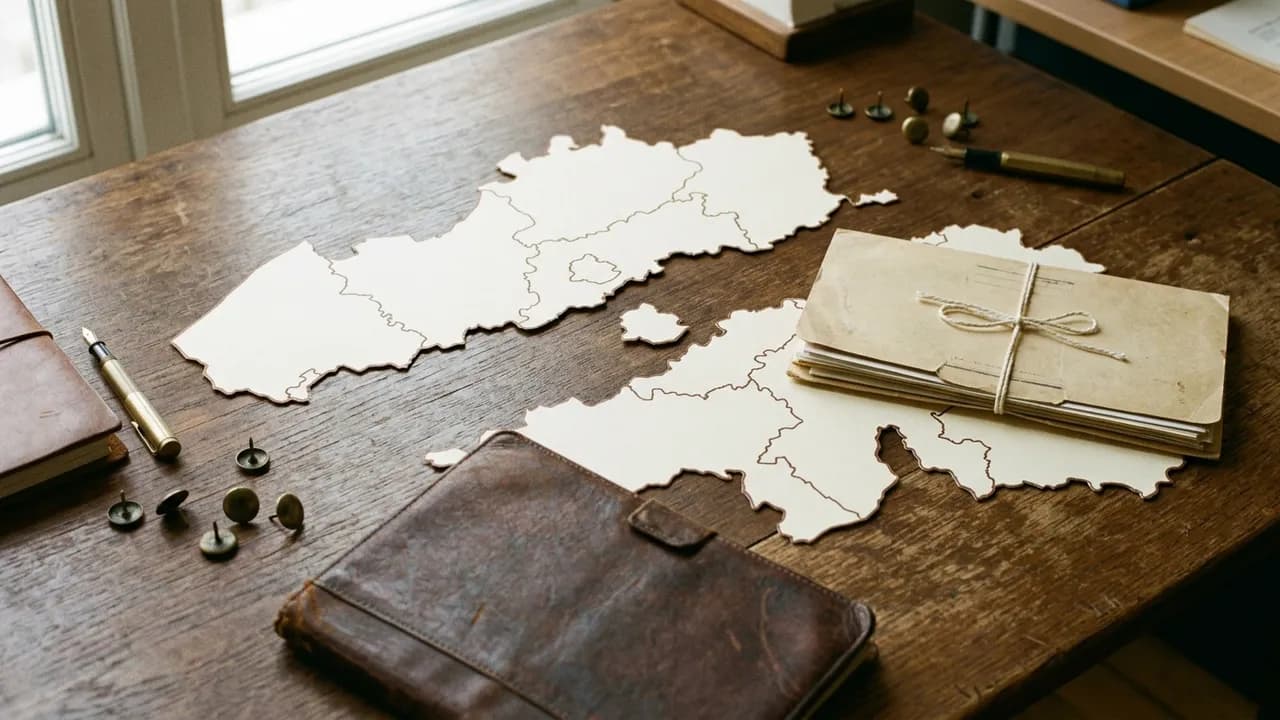
Public business financing in Belgium is regional. In Wallonia, you go to Wallonie Entreprendre or to your province's invest. In Brussels, to finance&invest.brussels. In Flanders, to PMV. Where the business actually operates decides which door you knock on, and these bodies almost always invest next to a bank or a private fund.
Why does your region decide who you talk to?
Because public financing was regionalised and the rest was not. The Code of Companies and Associations applies in the same way in Arlon and in Anderlecht. Corporate income tax follows the same federal scale. But each region has its own financing body, its own local relays and its own rules.
A private limited company (SRL) in Gembloux and one in Ixelles, same sector, same turnover, therefore do not deal with the same people.
The edge case I come across most often: registered office in Brussels, workshop in Walloon Brabant. The address in the articles of association does not automatically shut the Walloon door. An invest can step in outside its home turf when activity or economic impact in its province is significant, usually as a co-investor. A letterbox in Wallonia, on the other hand, opens nothing.
What public financing exists in Wallonia?
Two layers. At the top, Wallonie Entreprendre, the Walloon Region's public financing body, which provides equity, loans and guarantees. Below it, the provincial invests, which Wallonie Entreprendre funds and which handle local files.
The published figures give the scale. Wallonie Entreprendre reports a portfolio valued at €4.1 billion, of which €1 billion has been invested in the invests. It owns 40% of Namur Invest and sits as an observer on the board of Invest.BW.
The five invests in my survey:
- Noshaq (formerly Meusinvest) for the province of Liège;
- Sambrinvest for Charleroi Métropole;
- IMBC for Mons, the Borinage and the Centre;
- Namur Invest for the province of Namur;
- Invest.BW (formerly Nivelinvest) for Walloon Brabant.
My survey does not cover a local invest for the province of Luxembourg or for Wallonia picarde. I will not give you a name I have not checked: ask Wallonie Entreprendre, which will point you to the right relay.
Private money covers the whole region too. ORSA (formerly Investsud), an evergreen fund active since 1985, publishes a ticket of €500,000 to €2.5m for Walloon SMEs with 20 to 150 staff. The province-by-province detail is in the guide to the Walloon invests.
And in Brussels?
One regional body: finance&invest.brussels. For SMEs, it lends, guarantees and takes equity stakes of up to €5 million, always as a co-investor. Its subsidiary brusoc looks after the self-employed and very small businesses, notably with the proxi loan, which draws on private individuals' savings.
There are no provincial relays. The detail is in the guide to financing a business in Brussels.
And in Flanders?
The Flemish body is called PMV (Participatiemaatschappij Vlaanderen). This site focuses on Wallonia and Brussels, and I have not checked the terms PMV publishes. So I give you neither ticket nor instrument. If your main activity is in Flanders, PMV is where you start, not a Walloon invest.
Published ceilings, region by region
Checked on 15.10.2026 on the bodies' own websites. Anything not published stays "not published".
| Region | Public body | Local relays | Published ticket | Published instruments |
|---|---|---|---|---|
| Wallonia | Wallonie Entreprendre | 5 invests surveyed | Not published for Wallonie Entreprendre; Namur Invest generally €100,000 to €2.5m; Invest.BW up to €2.5m in total; Noshaq, Sambrinvest, IMBC not published | Equity, loans, guarantees |
| Brussels | finance&invest.brussels | brusoc (self-employed, very small businesses) | Up to €5m for SMEs, as a co-investor | Loans, guarantees, equity stakes, proxi loan |
| Flanders | PMV | Not surveyed | Not surveyed | Not surveyed |
Brussels is the only region whose central body publishes a ceiling. In Wallonia you have to look for it at the invests, and only two out of five display one. That does not mean the other three turn down large files: they simply do not commit to a figure in writing.

Who should you contact, depending on your situation?
| Your situation | First contact |
|---|---|
| Walloon SME, local need under €500,000 | Your province's invest (Namur Invest says it also works below that threshold) |
| Walloon SME, bank guarantee or large regional file | Wallonie Entreprendre |
| Walloon SME, €500,000 to €2.5m in equity or quasi-equity | A regional private fund (ORSA, for example) and the invest, in parallel |
| Brussels SME, up to €5m as part of a co-investment | finance&invest.brussels |
| Self-employed or very small business in Brussels | brusoc, including the proxi loan |
| Office in Brussels, production in Wallonia | The invest of the site's province, if activity there is significant |
| Main activity in Flanders | PMV |
To compare the players on tickets and instruments afterwards, the ranking of funds for SMEs covers the nine players in my survey.
How do you combine a regional financier and a bank?
Almost never one without the other. Invest.BW writes that it never funds the whole of a need on its own, finance&invest.brussels invests alongside others, and Wallonie Entreprendre guarantees bank loans.
The structure I see most often has three layers. The bank lends what it can cover with its collateral. The regional body adds a guarantee, or a subordinated loan that ranks behind the bank in a default and so improves the bank's ratios. A fund or an invest then brings equity or quasi-equity. When I analysed business loans in Namur, a file that arrived with a regional guarantee already under discussion read differently: the bank's residual risk went down, and so did the pressure on the owner's personal guarantees.
Each layer has a price, and it is not paid in the same currency. Bank debt takes no share of your capital. Nor does a subordinated loan, unless it is convertible. An equity stake is paid in percentage points. A made-up example: a fund putting in €500,000 at a pre-money valuation of €1.5m holds 25% after the round. In percentage terms, that is a quarter of the company, plus whatever board rights the shareholders' agreement sets. The full trade-off is in bank debt or equity.
Which mistakes should you avoid before filing?
- Approaching another province's invest because you know someone there: the area comes first.
- Expecting a public body to cover the whole need on its own.
- Negotiating the guarantee after the loan, when it changes the loan's terms.
- Forgetting that an invest taking equity often asks for a board seat, as Namur Invest states.
For a decision that commits your capital, have the structure reviewed by your accountant or a corporate lawyer. Regional bodies publish their rules; they do not publish the ones that will apply to your file.
Comparator
Compare investment funds side by side.
Compare now →
Frequently asked questions

From 2009 to 2017, Cédric spent eight years in the corporate lending department of a Belgian bank in Namur, on the side that turns files down and writes the covenants. He then became financial controller at an industrial SME in Hainaut just as a provincial invest took a stake in its capital. Based in Gembloux, he rereads the terms published by Walloon and Brussels funds and invests every month.